
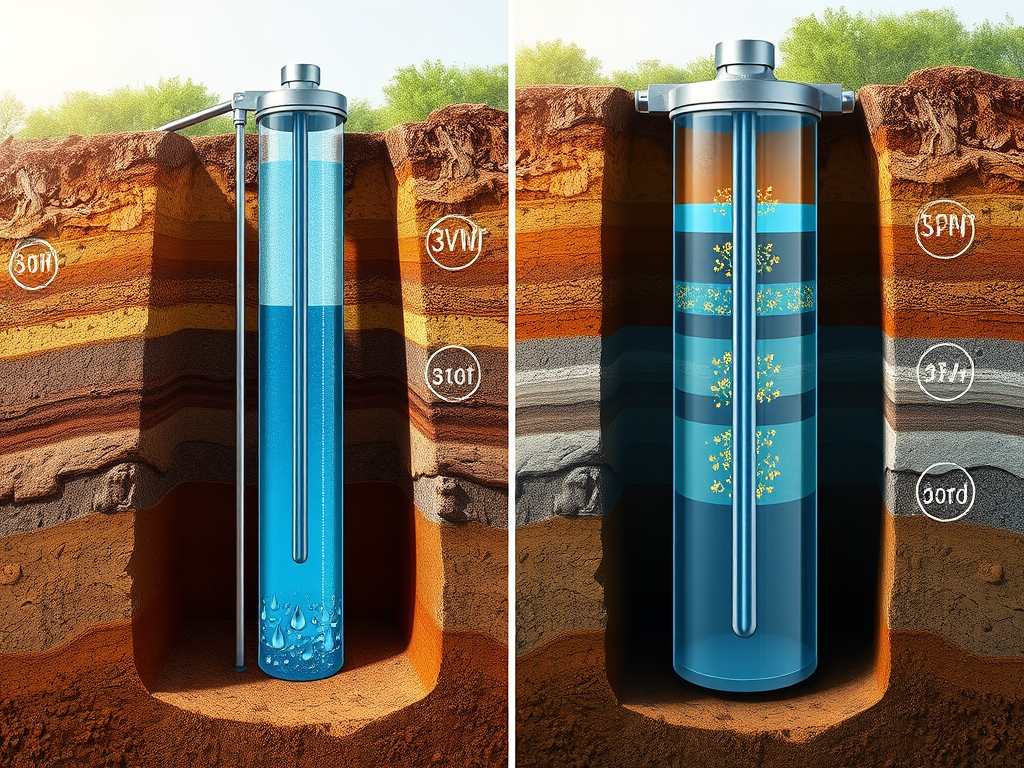
Horizontal vs. Vertical Water Wells
Water wells are used to extract groundwater, and they can be drilled in different orientations depending on the geological conditions and water availability. The two main types are horizontal water wells and vertical water wells.
1. Vertical Water Well
Drilling Direction: Straight down, perpendicular to the surface.
Benefits:
✅ Easier and more traditional method of drilling.
✅ Typically reaches shallow water-bearing layers.
✅ Lower drilling cost compared to horizontal wells.
Limitations:
❌ Limited access to water-bearing layers.
❌ May not be effective in areas with low water availability.
❌ Can be blocked by geological obstacles like hard rock formations.
2. Horizontal Water Well
Drilling Direction: Starts vertically but turns and extends horizontally underground.
Benefits:
✅ Can access multiple water-bearing layers over a wider area.
✅ Avoids geological barriers like hard rock formations.
✅ Higher water yield as it taps into more underground water sources.
Limitations:
❌ More expensive and technically complex to drill.
❌ Requires specialized equipment and expertise.
Key Differences
| Feature | Vertical Well | Horizontal Well |
|---|---|---|
| Drilling Direction | Straight down | Horizontal extension |
| Water Access | Limited to one layer | Can reach multiple layers |
| Cost | Lower | Higher due to complexity |
| Suitability | Shallow water sources | Deep or hard-to-reach water |
| Avoids Geological Barriers? | No | Yes |
Which One to Choose?
- If groundwater is available at shallow depths, a vertical well is a simpler and more cost-effective choice.
- If water is deeper or geological obstacles exist, a horizontal well is the better option as it accesses more water sources.






Leave a comment