
Stratiform Deposits: Types, Examples, and Mining Methods
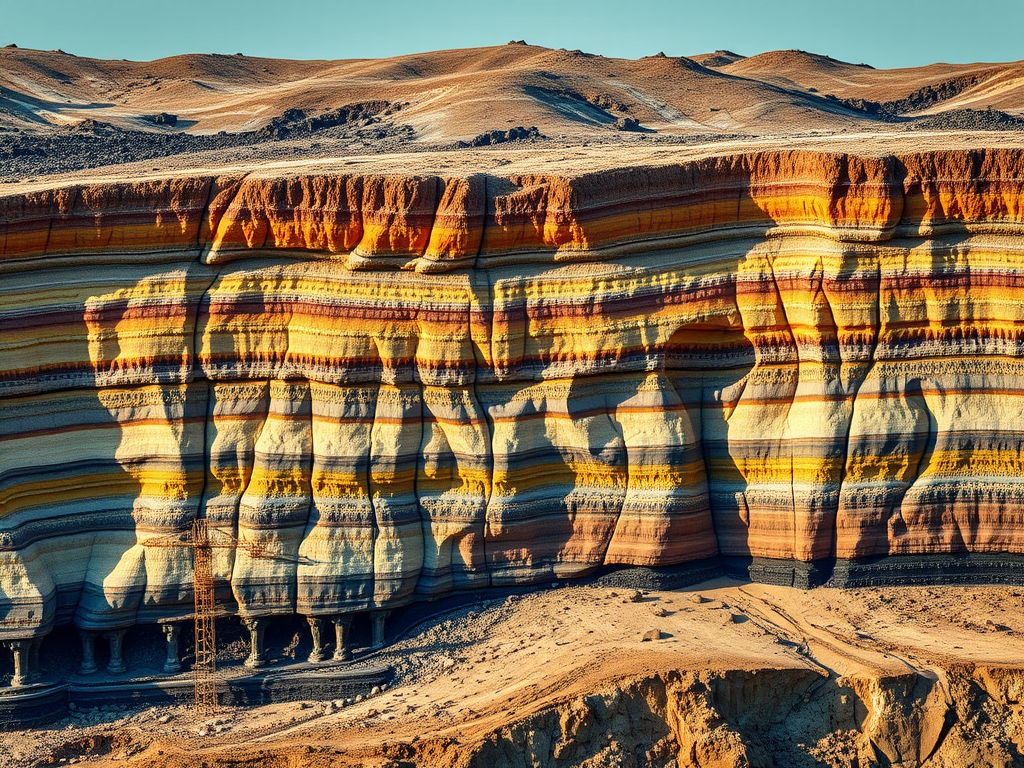
Stratiform deposits are mineral deposits that occur in distinct layers or strata within the Earth’s crust. These deposits can form through a variety of geological processes, such as precipitation from mineral-rich fluids, hydrothermal activity, or sedimentation. The nature of these deposits allows for different types and mining methods.
Types of Stratiform Deposits
- Sedimentary Rock-hosted Deposits:
- These deposits form within sedimentary rocks through the process of precipitation.
- Common examples: Coal, phosphate, and iron deposits.
- These deposits are often found in regions that have undergone sedimentary processes over long periods.
- Volcanogenic Massive Sulfide (VMS) Deposits:
- These deposits form in volcanic environments, often as a result of hydrothermal processes.
- Common examples: Copper, zinc, and lead deposits.
- These deposits are typically associated with ancient volcanic environments.
- Stratabound Copper-Lead-Zinc Deposits:
- These deposits are confined to certain layers within sedimentary rocks, forming copper, lead, and zinc mineralization.
- Common examples: Significant occurrences can be found in large sedimentary basins.
Examples of Stratiform Deposits
- Copperbelt of Zambia and the DRC:
- The Copperbelt is one of the world’s most important sources of copper and cobalt. The copper deposits in this region are an excellent example of stratiform deposits.
- Mississippi Valley Type (MVT) Lead-Zinc Deposits:
- These deposits are typically found in sedimentary rock sequences, such as limestone, and are rich in lead and zinc.
- Iron Formations of the Lake Superior Region (North America):
- These iron formations are some of the largest known stratiform deposits and are rich in iron ore, formed in ancient sedimentary environments.
Mining Methods for Stratiform Deposits
The extraction of minerals from stratiform deposits depends on the type and location of the deposit:
- Open-pit Mining:
- Common for near-surface deposits where mineralization is located in extensive, shallow layers. This method is widely used in coal and iron ore extraction.
- Underground Mining:
- Employed when the mineral deposit is deeper and cannot be efficiently extracted through open-pit methods. This method is typical for lead-zinc and copper deposits.
- Heap Leaching:
- A method in which crushed ore is treated with a chemical solution (like cyanide) to dissolve and recover metals such as gold or copper. This method is commonly used for low-grade copper and gold deposits.
- Flotation:
- A process used to separate valuable minerals from the surrounding rock. This is typically used for copper, lead, and zinc ores.
- Smelting:
- After flotation or leaching, smelting is used to extract the metals from the concentrates by heating them to high temperatures in a furnace.
- Leaching:
- Similar to heap leaching but can also be applied to ores like gold, where a solvent is used to extract metals directly from the ore.
Each mining method is tailored to the specific characteristics of the stratiform deposit, ensuring the most efficient and cost-effective extraction of the minerals.



Leave a comment