
Table o content
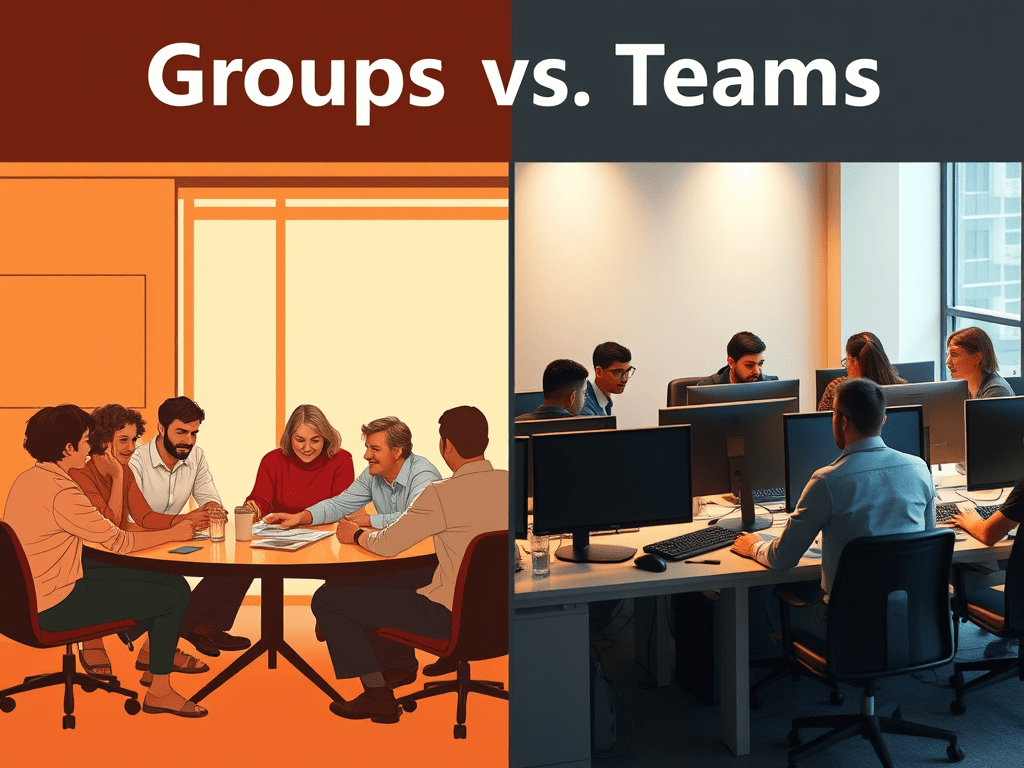
Differences Between Groups and Teams in Organizations
1. Structure and Organization
- Groups: A collection of individuals with a common purpose but without defined roles.
- Teams: Organized with specific roles and responsibilities assigned to each member.
2. Formality and Rules
- Groups: More informal, with fewer rules and regulations.
- Teams: More structured, often operating under defined policies and procedures.
3. Approach to Problem-Solving
- Groups: Looser structure, open-ended approach, and flexible problem-solving methods.
- Teams: Structured and goal-oriented, with systematic problem-solving techniques.
4. Size and Composition
- Groups: Typically smaller, often including members from diverse backgrounds.
- Teams: Generally larger and consist of individuals with specific expertise relevant to the task.
5. Focus and Objectives
- Groups: Emphasize collective brainstorming, discussion, and collaboration.
- Teams: Prioritize individual responsibilities within a shared mission to accomplish specific goals.
6. Flexibility and Change
- Groups: More open to change, experimentation, and adaptation.
- Teams: More likely to follow established processes and structured workflows.
7. Communication Style
- Groups: Communication is flexible, informal, and spontaneous.
- Teams: Communication tends to be more structured and formal.
8. Departmental Composition
- Groups: Often consist of members from different departments or areas.
- Teams: Typically include individuals from the same department or project group.
9. Leadership and Authority
- Groups: Usually do not have a designated leader; leadership may shift among members.
- Teams: Often led by a team leader or manager responsible for guiding the team toward objectives.
10. Purpose and Usage
- Groups: Primarily used for brainstorming, discussion, and idea generation.
- Teams: Designed for complex tasks, long-term projects, and performance-driven objectives.







Leave a comment