
Introduction
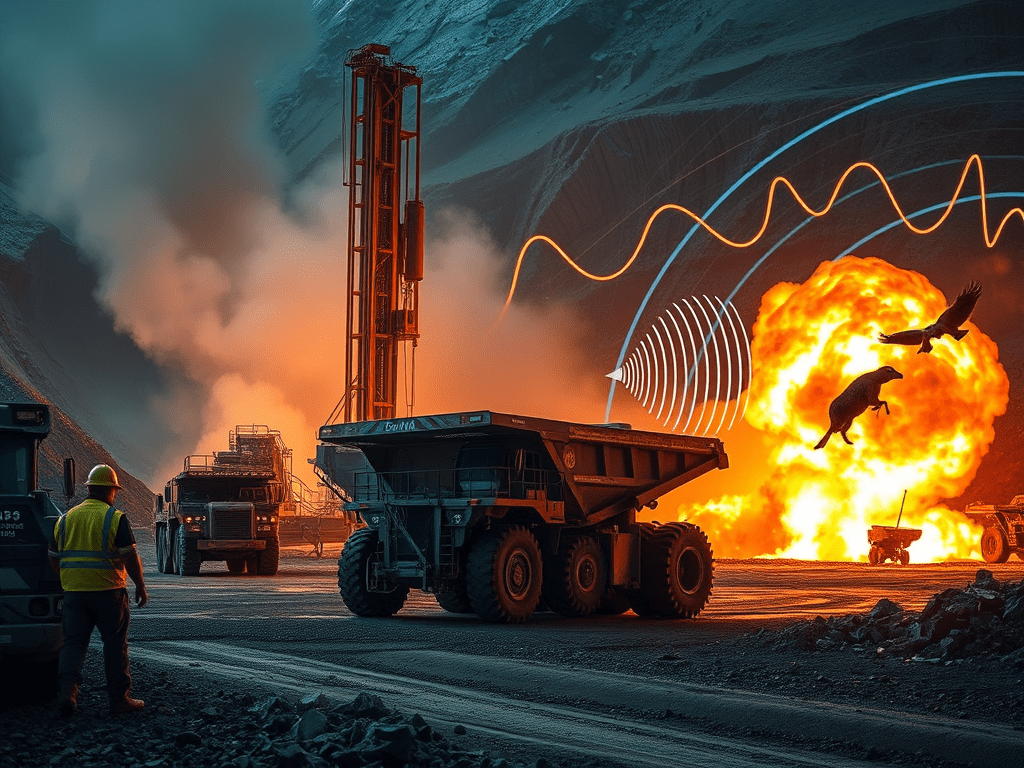
Noise pollution is a significant environmental and occupational health issue in mining operations. The use of heavy machinery, blasting, drilling, and transport vehicles generates excessive noise levels that can adversely affect miners, wildlife, and nearby communities. If not managed properly, prolonged exposure to high noise levels can lead to hearing loss, stress, and disruptions in the local ecosystem. Noise pollution in mining not only affects those working within the industry but also poses serious risks to biodiversity and local settlements, making it a pressing concern for sustainable mining practices.
Sources of Noise Pollution in Mining
- Blasting – Explosives are used to break rock formations, creating sudden, intense noise that can reach over 120 decibels (dB). The sound waves from blasting can travel long distances, disturbing not just miners but also nearby communities.
- Drilling and Excavation – Rotary and percussion drills generate continuous high-frequency noise, often exceeding safe limits for human exposure. The persistent noise from drilling operations can lead to permanent hearing damage if proper precautions are not taken.
- Haul Trucks and Loaders – Large transport vehicles contribute to persistent low-frequency noise pollution. The movement of heavy trucks on rough terrain produces both noise and vibrations that can damage structures and disturb residents.
- Crushers and Conveyors – Ore processing facilities produce high noise levels through mechanical crushing and material transport. This noise is often amplified in confined areas, making it even more hazardous to workers operating in these spaces.
- Ventilation Systems – Underground mines use large fans and air circulation systems that generate constant noise. The continuous hum of ventilation systems can contribute to long-term noise exposure problems for underground miners.
- Vibrations from Heavy Equipment – Bulldozers, draglines, and excavators create vibrations that amplify noise levels in and around mining sites. These vibrations can also lead to structural damage in nearby buildings and natural formations, exacerbating the problem.
Impacts of Noise Pollution
- Human Health Effects
- Hearing loss and tinnitus among miners due to prolonged exposure to high decibel levels.
- Increased stress, fatigue, and reduced concentration, leading to workplace accidents.
- Sleep disturbances and psychological stress for nearby communities.
- Increased risk of cardiovascular diseases due to long-term exposure to high noise levels.
- Environmental Effects
- Disturbance to wildlife, affecting breeding, communication, and migration patterns. Many species rely on sound for survival, and excessive noise can disrupt their ability to detect predators or communicate with mates.
- Increased stress in animals, leading to habitat displacement and reduced population numbers in affected areas.
- Altered ecosystem dynamics due to changes in species behavior. Some species may vacate an area entirely, leading to imbalances in local food chains and biodiversity loss.
Noise Control and Mitigation Strategies
- Engineering Controls
- Use of noise-dampening materials in mining equipment and processing plants.
- Enclosing high-noise machinery within soundproof structures to reduce the spread of noise.
- Installing vibration isolators to reduce noise transmission and minimize the impact of heavy equipment movements.
- Utilizing advanced technology such as electric-powered mining equipment, which produces significantly less noise than traditional diesel-powered machinery.
- Administrative Controls
- Implementing shift rotations to minimize workers’ exposure to high noise levels, ensuring they are not exposed for extended periods.
- Scheduling noisy operations during times least disruptive to communities, such as mid-day hours when fewer people are at home.
- Establishing buffer zones between mining operations and residential areas, planting vegetation barriers that can absorb some of the noise.
- Personal Protective Equipment (PPE)
- Providing miners with high-quality earplugs and noise-canceling earmuffs to reduce direct exposure.
- Regular hearing tests to monitor and prevent occupational hearing loss, ensuring early intervention if problems arise.
- Training workers on the risks associated with noise pollution and the importance of using protective equipment properly.
- Regulatory and Monitoring Measures
- Compliance with occupational noise standards set by regulatory agencies, such as the Occupational Safety and Health Administration (OSHA) and the World Health Organization (WHO).
- Regular noise monitoring using decibel meters to assess and control noise pollution levels, ensuring that they do not exceed safe limits.
- Public awareness and engagement to address community concerns regarding mining noise, fostering better relations between mining companies and affected communities.
- Implementation of stricter regulations on the design and operation of mining machinery to ensure they operate within acceptable noise limits.
Conclusion
Noise pollution in mining is a serious environmental and occupational hazard that requires effective management strategies. If left unaddressed, it can have long-term consequences on both human health and the environment. By implementing engineering controls, administrative measures, and regulatory compliance, mining companies can mitigate noise pollution and protect both human health and the surrounding ecosystem. Sustainable mining practices must prioritize noise reduction to ensure a safer and healthier environment for workers and nearby communities. Investing in research and development for quieter mining technology and fostering a culture of noise awareness in the mining industry are essential steps toward minimizing the impact of noise pollution.
Keywords: Noise pollution, mining noise, occupational hazards, blasting noise, environmental impact, hearing loss, noise mitigation, mining operations, regulatory compliance, heavy machinery noise, industrial pollution, noise monitoring, vibration control, mining safety, ecosystem disruption, worker health, noise reduction strategies.







Leave a comment