

Geochemically Abundant and Scarce Metals
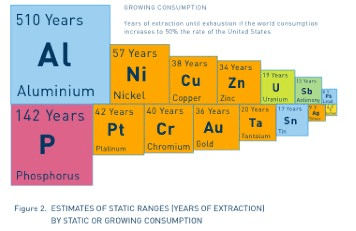
Metals used in industrial and technological applications can be categorized into two groups based on their abundance in the Earth’s crust:
- Abundant Geochemical Metals:
- These metals make up more than 0.1% of the Earth’s crust.
- The five key abundant geochemical metals are:
- Aluminium
- Iron
- Magnesium
- Manganese
- Titanium
- Scarce Geochemical Metals:
- These metals account for less than 0.1% of the Earth’s crust.
- Some common scarce metals include:
- Copper
- Lead
- Zinc
- Gold
- Silver
While all metals can be detected, in small amounts, in nearly every rock through accurate chemical analysis, there are significant differences in how abundant and rare metals occur in rocks.
Abundant vs. Scarce Metals in Rocks
- Abundant Geochemical Metals:
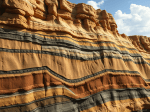
- These metals are typically found as basic constituents in minerals. For instance, basalt, a common igneous rock, is primarily composed of minerals like olivine, pyroxene (iron-magnesium silicates), feldspar (sodium-calcium-aluminium silicate), and ilmenite (iron-titanium oxide).
- In the case of basalt, chemical analysis reveals many geochemically rare metals but no indication that these rare metals are present as major components.
- Scarce Geochemical Metals:
- These metals are much rarer in ordinary rocks. They do not usually form their own minerals in common rocks. Instead, they are transported through the process of atomic replacement, where atoms of a scarce metal replace atoms of a more abundant metal in the mineral structure.
- For example, copper, zinc, and nickel can replace iron and magnesium atoms in minerals like olivine and pyroxene. However, this replacement process leads to atomic tension and is limited by factors like temperature, pressure, and chemical conditions.
- Despite these limitations, scarce metals still show up in small quantities in rocks, often only a few hundred atoms per million host atoms, and can be found more abundantly when specific geological processes or local enrichment occur.
Conclusion
- Abundant Metal Ores: Can be found in many common rocks because these metals are integral components of the minerals in these rocks.
- Scarce Metal Ores: Are rare and only appear in special cases where specific geological processes and local enrichment push the limits of atomic replacement, creating ore deposits.




Leave a comment