
Efficiency Ratio: Definition, Formula, Types, and Example
Definition
The efficiency ratio is a financial metric used to assess the operational efficiency of a business. It is calculated by dividing operating expenses by net sales. A higher efficiency ratio indicates lower efficiency, as it suggests a larger proportion of sales revenue is consumed by operating expenses.
Formula
Efficiency Ratio = Operating Expenses / Net Sales
Types of Efficiency Ratios
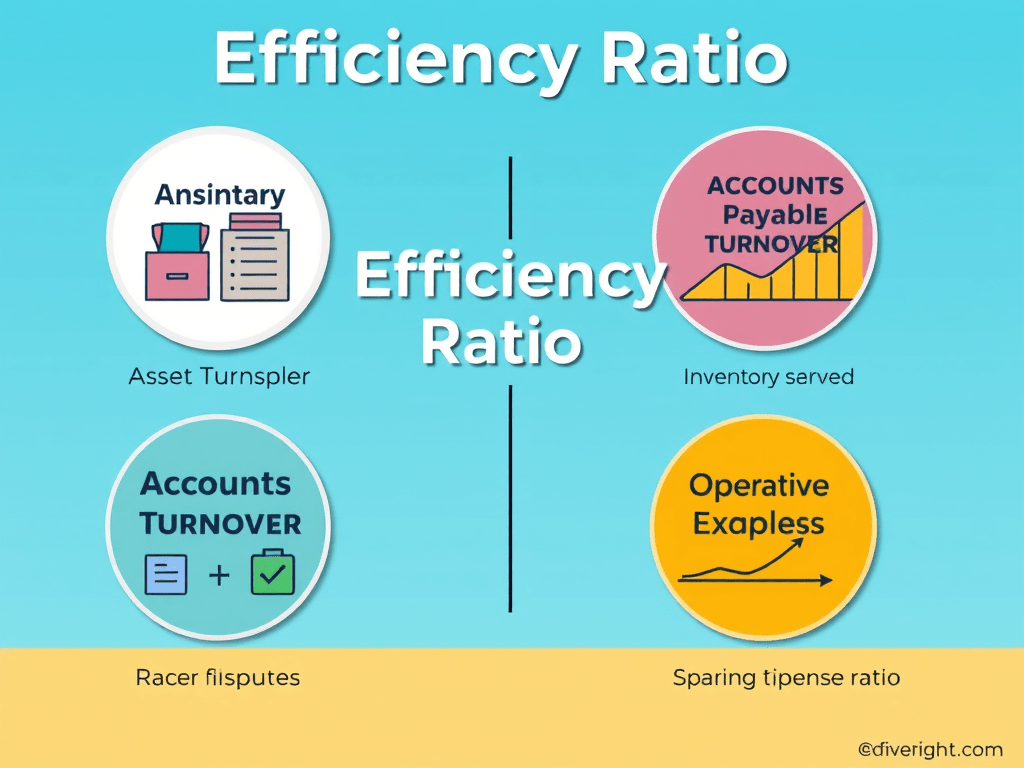
- Asset Turnover Ratio
- Measures how efficiently a company utilizes its assets to generate sales.
- Formula: Net Sales / Average Total Assets
- Inventory Turnover Ratio
- Indicates how quickly a company converts inventory into sales.
- Formula: Cost of Goods Sold / Average Inventory
- Accounts Payable Turnover Ratio
- Evaluates how efficiently a company pays its suppliers.
- Formula: Accounts Payable / Average Accounts Payable
- Operating Expense Ratio
- Assesses the efficiency of a company’s operational activities.
- Formula: Operating Expenses / Total Sales
Example Calculation
Consider Company ABC’s financial data for the year 2020:
- Net Sales: $1,000,000
- Operating Expenses: $200,000
- Average Total Assets: $800,000
- Cost of Goods Sold: $600,000
- Average Inventory: $400,000
- Accounts Payable: $100,000
The efficiency ratios for Company ABC are:
- Asset Turnover Ratio = 1,000,000 / 800,000 = 1.25
- Inventory Turnover Ratio = 600,000 / 400,000 = 1.5
- Accounts Payable Turnover Ratio = 100,000 / 100,000 = 1.0
- Operating Expense Ratio = 200,000 / 1,000,000 = 0.2
Conclusion
The efficiency ratio is a key financial metric for measuring a company’s operational effectiveness. By analyzing different types of efficiency ratios, businesses can gain insights into how well they utilize assets, manage inventory, and handle supplier payments. A lower efficiency ratio indicates better operational efficiency, leading to improved profitability and financial performance.







Leave a comment