
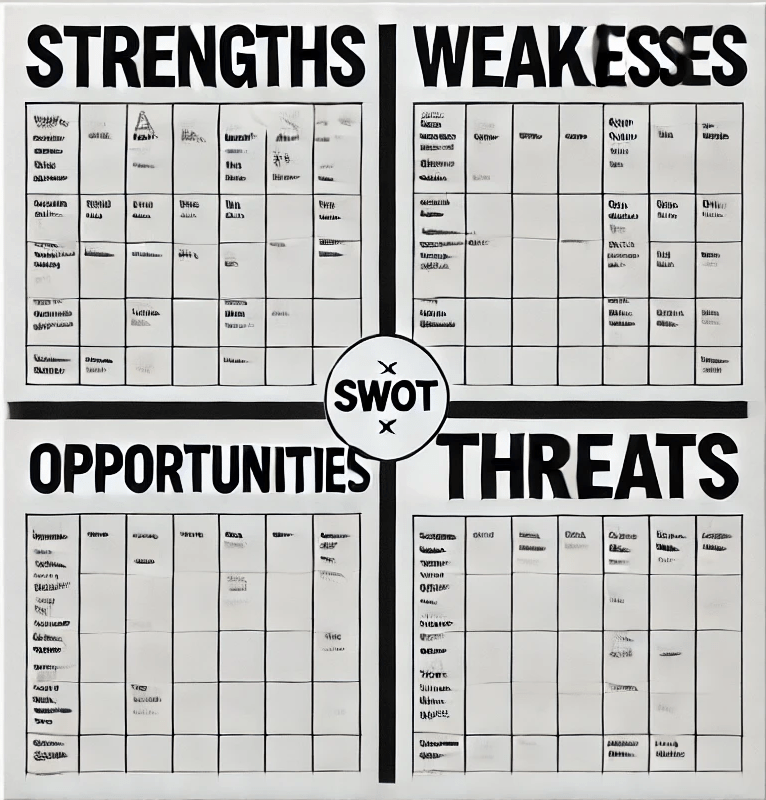
SWOT Analysis
SWOT stands for Strengths, Weaknesses, Opportunities, and Threats. It’s a framework used to identify and analyze the internal and external factors that can impact an organization’s ability to achieve its objectives.
| Strengths | Weaknesses |
|---|---|
| • Strong brand image | • Limited resources |
| • Skilled team | • Outdated systems |
| • Unique technology | • Gaps in expertise |
| Opportunities | Threats |
| • Emerging markets | • Intensifying competition |
| • Technological advancements | • Regulatory changes |
| • Shifting consumer preferences | • Economic downturns |
Opportunity-Threat Matrix
This matrix helps categorize opportunities and threats based on their significance and likelihood of occurrence. It usually has four quadrants:
- High Opportunity, High Threat
- Opportunities with significant potential but also come with high risks. Organizations should carefully consider their strategies to leverage these opportunities while mitigating the associated threats.
- High Opportunity, Low Threat
- Favorable opportunities with minimal risks. These are generally ideal for organizations to pursue as they offer significant benefits with low chances of negative impact.
- Low Opportunity, High Threat
- Situations with minimal potential benefits and high risks. Organizations should be cautious and develop strategies to avoid or minimize these threats.
- Low Opportunity, Low Threat
- Low-priority situations that have neither significant benefits nor substantial risks. These can often be deprioritized in strategic planning.
Here’s a simplified visual representation:
| High Threat | Low Threat | |
|---|---|---|
| High Opportunity | Significant potential with risks | Ideal situations to pursue |
| Low Opportunity | Cautious approach required | Low priority |
This matrix can be a valuable tool for strategic decision-making, helping organizations focus on areas that offer the best balance of opportunity and risk.







Leave a comment