
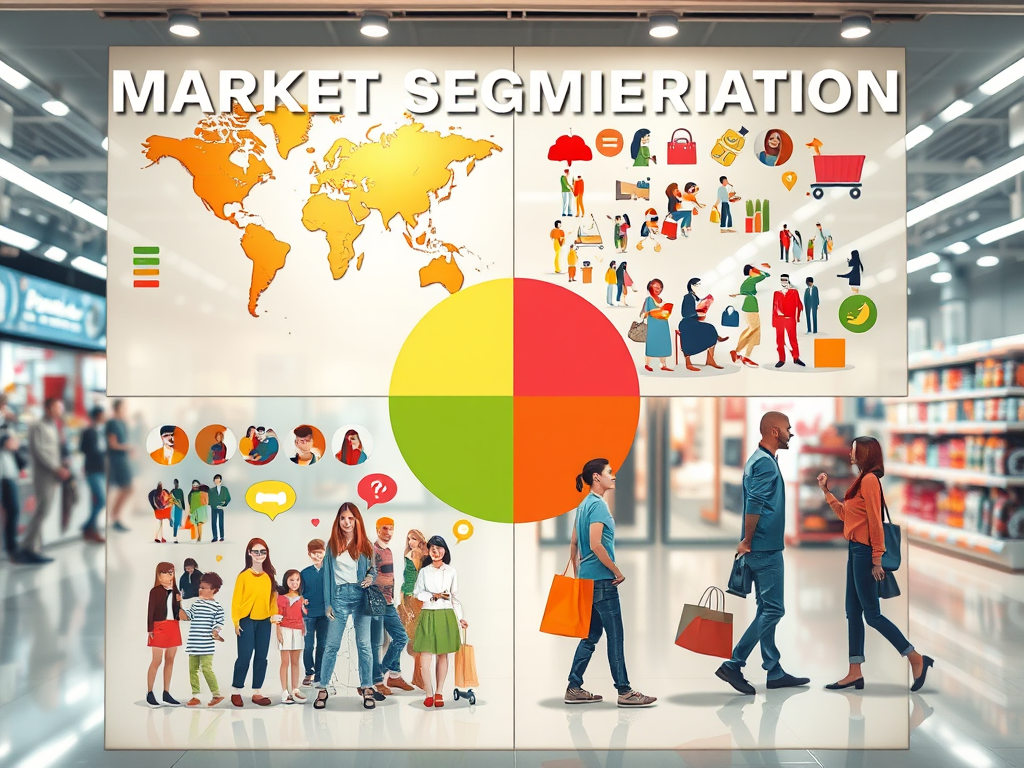
Table of Content
- 1. Geographic Segmentation
- 2. Demographic Segmentation
- 3. Psychographic Segmentation
- 4. Behavioral Segmentation
1. Geographic Segmentation
- Region: Dividing the market based on geographic regions (e.g., North America, Europe, Asia).
- Country: Segmentation by individual countries.
- City: Segmenting by specific cities or metropolitan areas.
- Density: Segmenting based on population density (e.g., urban, suburban, rural).
- Climate: Segmenting by climate types (e.g., temperate, tropical, arid).
2. Demographic Segmentation
- Age: Market segmentation by age groups (e.g., children, young adults, seniors).
- Gender: Segmenting based on gender (e.g., male, female).
- Income: Segmenting by income levels (e.g., low, middle, high-income groups).
- Education: Segmenting by education level (e.g., high school, college, postgraduate).
- Occupation: Segmenting by job titles or industries.
- Marital Status: Segmenting based on whether the consumer is single, married, divorced, etc.
- Ethnicity: Segmenting based on ethnic or racial groups.
- Religion: Segmenting based on religious beliefs.
3. Psychographic Segmentation
- Lifestyle: Segmenting by lifestyle choices (e.g., active, eco-friendly, adventurous).
- Interests: Segmenting based on hobbies and interests (e.g., sports, technology, arts).
- Attitudes: Segmenting by consumer attitudes toward certain issues (e.g., health-conscious, politically active).
- Values: Segmenting based on core values or beliefs (e.g., sustainability, innovation, family-oriented).
4. Behavioral Segmentation
- Purchase Frequency: Segmentation based on how often consumers buy a product (e.g., regular, occasional, first-time buyers).
- Brand Loyalty: Segmenting by how loyal customers are to a brand.
- Usage Rate: Segmentation by how frequently consumers use a product (e.g., heavy, moderate, light users).
- Benefits Sought: Segmentation by the specific benefits consumers seek from a product (e.g., convenience, quality, cost-effectiveness).
These types of segmentation help businesses understand their customers better and tailor their marketing strategies to meet the specific needs and preferences of each segment.







Leave a comment